1565–1815 · Economy
Silver for silk: the Manila Galleon trade
American silver travelled to Manila and came back as Asian silk, porcelain and spices. What the galleons carried, who controlled the trade and what the sources say.
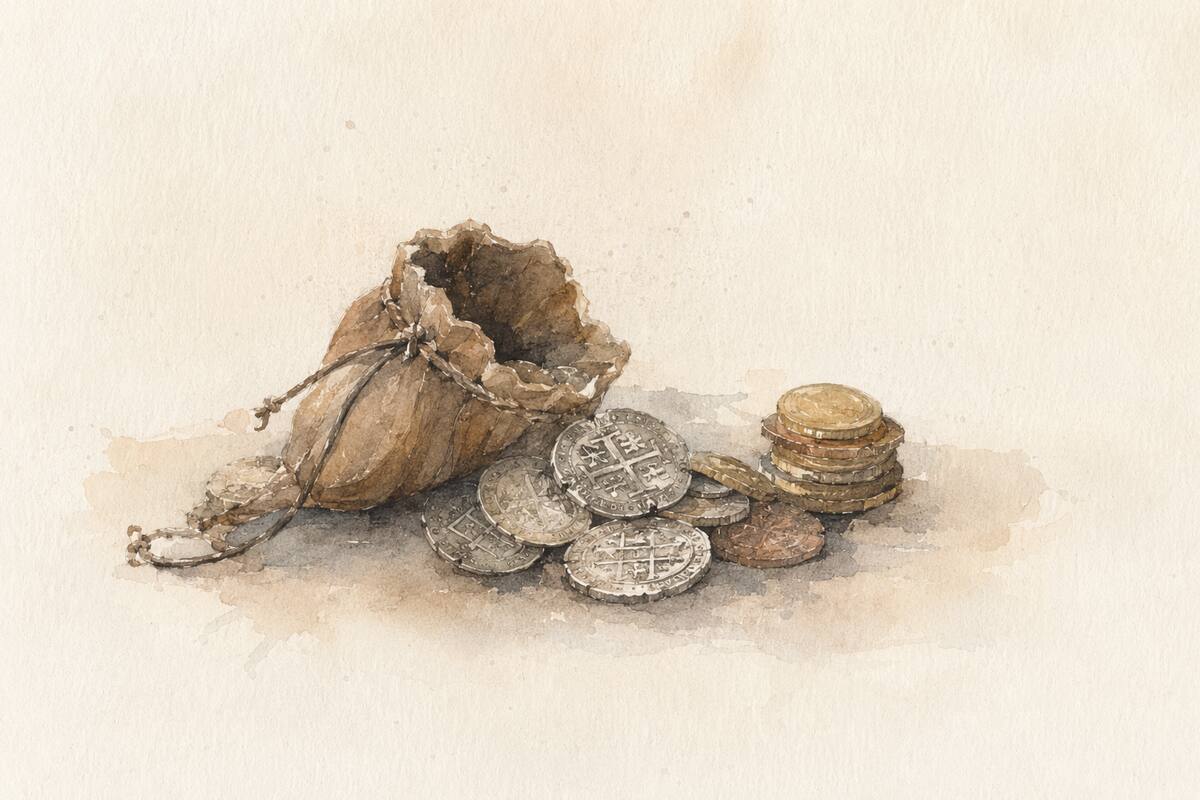
The Manila Galleon was, above all, an exchange of silver for Asian goods. Silver from American mines travelled from Acapulco to Manila, where Chinese merchants exchanged it for silks, porcelain, spices, lacquerware and cottons from all over Asia, which returned to the Americas on the next galleon.
The Crown tried to cap the trade with a “permiso” that set the maximum value of the cargo, to protect the merchants of Seville and Cádiz and slow the outflow of silver. Merchants in Manila and Mexico argued over and worked around those limits, and the sources show more traffic than was registered.
The earliest cargoes already show the scale of the exchange: according to an account from the early 1570s collected by Blair and Robertson, two ships arriving from the western islands brought hundreds of pieces of silk, more than twenty thousand pieces of fine porcelain and hundreds of quintals of cinnamon.
344 statements49 sources1 discrepancies
Ask the atlas →How did the silver-for-silk exchange of the Manila Galleon work?
Where the sources disagree
How many Chinese ships reached Manila each year?
Every year four hundred ships come from Chincheo in China with silks and other goods, and take silver coin in return.
Each year twelve or fifteen ships from China arrive in Manila laden with merchandise such as silks, wheat, flour, sugar, fruits, metals, and bronze artillery, all in abundance and at very moderate prices.
Four hundred ships a year is far above what other documents of the time report — a dozen or a few dozen junks — so it is probably a transcription or extraction error.
Spotted while preparing this pageWhat the sources say
A selection of the corpus statements on this topic, grouped by source.
The Chinese and the Parian (Blair & Robertson, Vol. VII)
- Commerce has gradually increased and many Sangley ships arrive in Manila laden with goods such as linen, silks, ammunition, wheat, flour, sugar, and fruits.
Benavides. to the King (Blair & Robertson, Vol. X)
- The other parts of India that have trade in Chinese goods and in goods carried to Spain - such as porcelains, silks, and chests - must lose very materially. (p. 193)
Wearing of Chinese Stuffs (Blair & Robertson, Vol. VIII)
- The natives are prohibited from using Chinese silks and fabrics for reasons of importance to the general welfare and good government of the islands. (p. 79)
Relación de las Islas Filipinas y de lo que en ellas han trabajado los padres de la Compañía de Jesús
- The inhabitants pay little attention to the many gold mines and placers because Chinese silks yield them greater profits. (p. 23, machine-translated)
Reply to Rada's Opinion (Blair & Robertson, Vol. III)
- The Chinese bring them many silks, porcelains and perfumes; with iron and other goods, from which they make great profits.
El Pacífico Hispanoamericano: política y comercio asiático en el Imperio Español (1680-1784)
- Europe had little to offer in exchange for silks, Indian cotton and Asian spices, so Mexican and Peruvian silver was used as a medium of exchange to balance the trade relationship. (p. 24, machine-translated)
- Spain attempted to limit in Mexico and prohibit in Peru the consumption of Asian silks with the intention of avoiding an uncontrolled flow of Peruvian silver towards the Orient. (p. 25, machine-translated)
- The Consulate of Seville sent a report to the Council of the Indies in 1714 stating that the kingdom of New Spain abounds in cloth from Castile, foreign cloth, and silks from Asia and the Philippines, it is impossible to consume it all, and a large part is introduced into Peru. (p. 130, machine-translated)
El comercio de Nueva España con Filipinas, 1590-1785
- In 1718, Viceroy Valero of New Spain received communication from the Spanish Crown regarding the prohibition of the silk and silver trade. (p. 76, machine-translated)
- In 1718, Viceroy Valero refused to execute the cedula prohibiting the transport of silk and silver in the annual galleon. (p. 76, machine-translated)
Los sangleyes chinos en el comercio novohispano
- The plundering of the Santa Ana galleon amounted to 600,000 pesos in gold and one and a million and a half in merchandise, including silks, brocades, spices, and pearls. (p. 59, machine-translated)
- From China they began to bring the wealth of its silks and porcelain, after our coins of four and eight reales arrived, and they supplied the Philippine islands with cattle and even ink and paper. (p. 207, machine-translated)
Los chinos y el modelo colonial español en Filipinas
- In Manila, Spaniards and Chinese merchants trade silks at fixed prices in silver, and all business must be concluded by the month of May so that the merchant can return and load the ships that depart for New Spain. (p. 10, machine-translated)
La ruta del Galeón de Manila historia comercial entre el Imperio Español, Filipinas y China
- The galleons transported Spanish silver from the West Indies in exchange for spices and silks from China. (p. 1, machine-translated)
Frequently asked questions
What was traded on the Manila Galleon?
Westbound, mostly silver in coins and bars; eastbound, silk and other textiles, porcelain, spices such as cinnamon, wax, lacquerware and luxury goods. People travelled too, including enslaved Asians.
Why did China want American silver?
In the sixteenth and seventeenth centuries the Chinese economy demanded huge amounts of silver as a means of payment, and American silver became the currency of Asian trade. That is why Chinese merchants came to Manila to exchange their goods for Spanish pesos.
How this page was made: the introduction was written with AI assistance from the project's corpus and checked against its sources. The statements listed are paraphrases extracted automatically from each source (and translated when the source is in another language); they may contain errors, so check the linked original source. Last updated: 2026-10-19.