16th–18th centuries · Trade
The Acapulco fair
Every year the galleon's arrival turned Acapulco into Asia's great market in the Americas. How the fair worked, who bought there and how it declined, according to the sources.
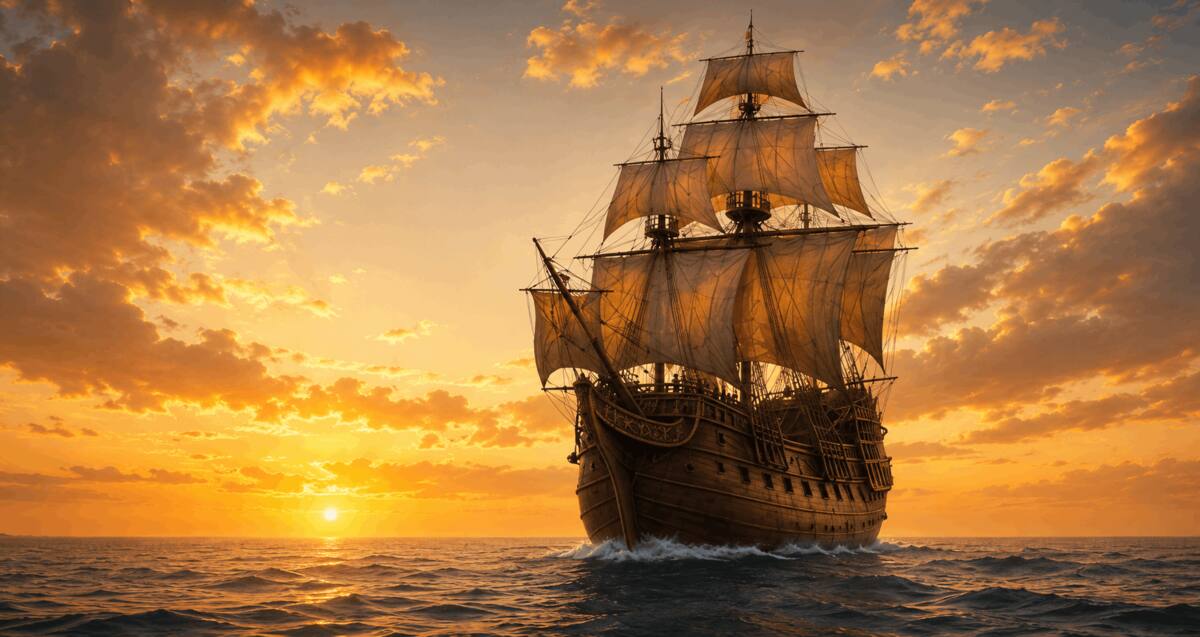
Acapulco was the galleon's American port. Andrés de Urdaneta was already recommending it in the 1560s as large, safe and well supplied with water and timber. When the Manila galleon arrived, the small port filled with merchants, muleteers and officials: the cargo was sold at a fair that, according to one source, was regulated in 1579 and lasted about a month.
The main buyers were the merchants of Mexico City, who distributed silks, porcelain and spices across the viceroyalty and beyond, to Peru. Studies of the eighteenth century describe a fair increasingly policed by the Crown and with falling prices, until it was practically paralysed around 1770.
The fair's figures — declared values, permits, registered goods — come from fiscal and commercial records that often disagree, because much of the trade happened off the books.
112 statements8 sources0 discrepancies
Ask the atlas →How did the Acapulco fair of the Manila Galleon work?
What the sources say
A selection of the corpus statements on this topic, grouped by source.
El comercio de Nueva España con Filipinas, 1590-1785
- In 1766, the fair was advantageous for Philippine trade because the items were sold at very high prices due to the abundance of funds introduced by Mexican merchants and the scarcity of oriental merchandise. (p. 146, machine-translated)
- In 1768, when the fair opened, the excess of goods that arrived caused the Filipinos to raise merchandise prices to exorbitant levels, prompting the majority of Mexican merchants to withdraw from the fair in protest. (p. 145, machine-translated)
- In 1770, no fair was held; some Filipino merchants stayed in New Spain to sell their merchandise, and warehouses acquired them through direct consignations. (p. 146, machine-translated)
El Pacífico Hispanoamericano: política y comercio asiático en el Imperio Español (1680-1784)
- At the Acapulco fair of 1724, pequines that did not fall below a certain price were sold piece by piece at lower prices in Mexico City shops, and fine first-quality zarazas sold for pesos while the second-quality had a different price. (p. 167, machine-translated)
- Two years before the 1741 auction, at the Acapulco fair first-quality white silk stockings were set at four pesos per pair, pequines at pesos, sayas at four pesos and six reales, and colored capicholas at pesos. (p. 167, machine-translated)
- Or the case of General Juan Isidro de Pardiñas, who as responsible in Acapulco for the discharge of the galleon San Francisco Javier in 1702 had suffered death threats for trying to prevent the presence of Peruvian ships located nearby from participating in the fair. (p. 140, machine-translated)
El Galeón de Manila, hombres de hierro en barcos de madera
- In 1579, the Acapulco Fair was regulated and lasted one month. (p. 8, machine-translated)
- Imported goods from Manila were exhibited at the Acapulco Fair after paying the import duties. (p. 8, machine-translated)
Los sangleyes chinos en el comercio novohispano
- María, Lucía and Pablo, originally from Bengal, India, arrived in Acapulco on the galleon San Pedro in 1592, brought by captain Antonio Díaz de Cáceres, and were auctioned at the annual fair. (p. 232, machine-translated)
Redes comerciales y estrategias matrimoniales. La mujeres en el comercio del Galeón de Manila (siglos XVII-XVIII)
- Once the naos were loaded and departed for New Spain, it was expected that they would arrive safely and return with the silver from the sale of products at the Acapulco fair. (p. 1, machine-translated)
La audiencia de Manila y los chinos de Filipinas. Casos de integración en el delito
- Chinese trade at Manila's annual fairs is the foundation of the Acapulco run and of the colonial economy. (p. 16, machine-translated)
Del Celeste Imperio a la Nueva España: importación, distribución y consumo de la loza de la China del periodo Ming tardío en el México virreinal
- The cargo of the galleons was sold at the fair of Acapulco, which increased the population of the port. (p. 5, machine-translated)
Hitos Históricos del Galeón de Manila — Real Academia de la Historia
- In 1720 the fleet and galleon project for Peru and New Spain was promulgated, which reorganizes trade with the Indies according to the traditional fleet system, sets departure dates and port stays, ratifies the move of the fairs from Veracruz to Jalapa, and replaces the almojarifazgo with the palmeo duty. (machine-translated)
Frequently asked questions
When was the Acapulco fair held?
It was organised after the Manila galleon arrived, following several months at sea. One source in the corpus says it was regulated in 1579 and lasted a month.
Who bought at the fair?
Mainly the merchants of Mexico City, along with traders from other parts of the viceroyalty and from Peru, despite restrictions on direct trade with Lima.
How this page was made: the introduction was written with AI assistance from the project's corpus and checked against its sources. The statements listed are paraphrases extracted automatically from each source (and translated when the source is in another language); they may contain errors, so check the linked original source. Last updated: 2026-10-19.