1596–1597 · Japan
The wreck of the San Felipe and the martyrs of Nagasaki
In 1596 the galleon San Felipe, bound for Acapulco, ended up in Japan. Its cargo was seized and months later 26 Christians were crucified in Nagasaki. What the sources say.
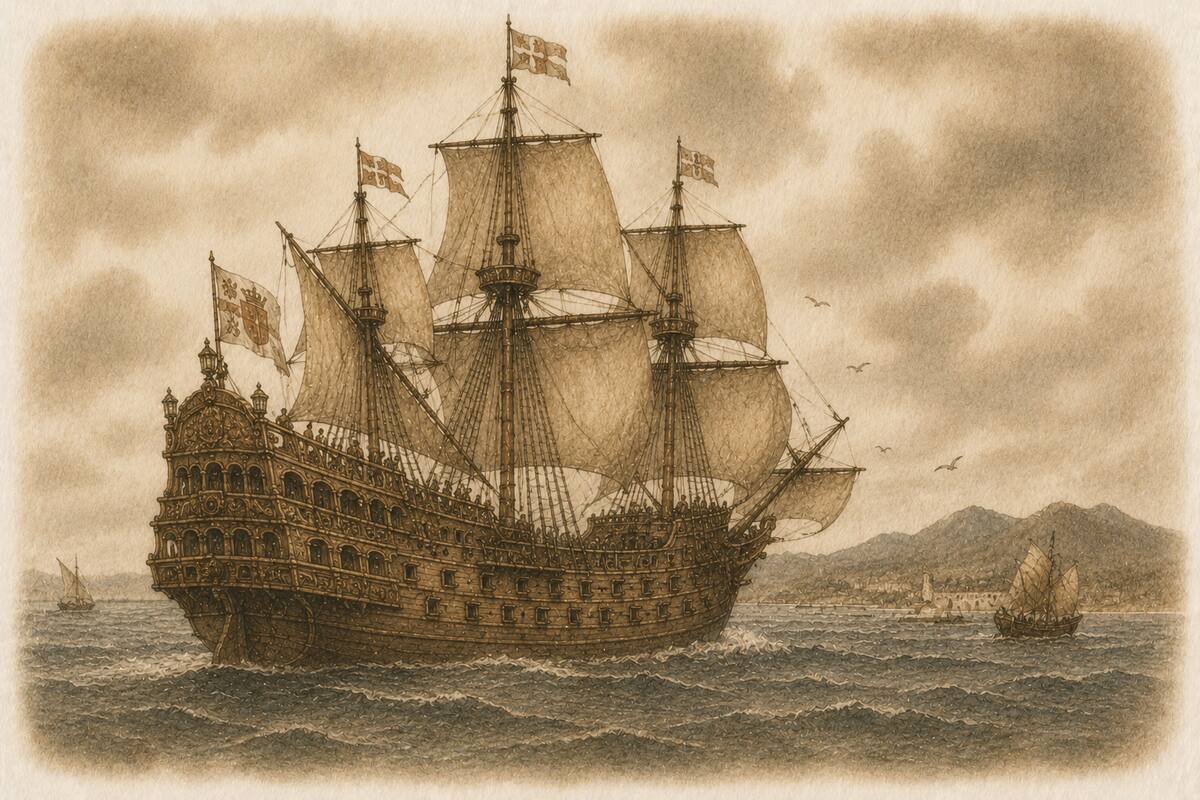
In 1596 the galleon San Felipe left Manila for Acapulco. Storms damaged its rudder and two masts and drove it to the coast of Japan, where it was wrecked. The officials of the regent Toyotomi Hideyoshi — Taicosama in Spanish sources — seized its rich cargo.
The episode coincided with a hardening of Hideyoshi's policy towards Christianity. In February 1597 twenty-six Christians — six Franciscans, three Jesuits and seventeen Japanese laymen — were crucified in Nagasaki, among them the Franciscan Felipe de Jesús, born in Mexico City, who had been aboard the galleon and is regarded as the first Mexican saint.
Relations with Japan did not break off: galleons kept calling at its coasts, and in 1602 Tokugawa Ieyasu offered guarantees to the castaways of the Espíritu Santo. The sources also mention more than one ship called San Felipe, something worth keeping in mind when reading them.
54 statements9 sources1 discrepancies
Ask the atlas →How was the wreck of the San Felipe connected to the martyrs of Nagasaki?
Where the sources disagree
One San Felipe or two?
The fragments found on the beaches of Guerrero Negro, Baja California, are remnants of the wreck of the San Felipe galleon in 1576. (machine-translated)
In 1596 the Spanish galleon San Felipe was shipwrecked in Japanese waters. (machine-translated)
Not a contradiction but a case of two ships sharing a name: the different dates and places point to two separate wrecks. The name San Felipe was given to several ships of the period.
Spotted while preparing this pageWhat the sources say
A selection of the corpus statements on this topic, grouped by source.
Chapter Vi — Of The Government Of Don Francisco Tello; And Of The Second Establishment (The Philippine Islands, Moluccas, Siam, Cambodia, Japan and China)
- The Japanese martyrs were canonized by Pope Pius IX in 1862. (p. 167)
- The governor asked Taicosama to return the properties and the artillery of the Spanish galleon to avoid future reprisals. (p. 104)
- Despite being guarded by the Japanese, the bodies of the martyrs were rescued and distributed as relics. (p. 103)
War with Zambales (Blair & Robertson, Vol. VIII)
- Fray Pedro Bautista and five of his brethren were martyred in Nagasaki. (p. 233)
Chapter V — Of The Government Of Gomez Perez Dasmariñas ; And Of The Licentiate (The Philippine Islands, Moluccas, Siam, Cambodia, Japan and China)
- Taicosama, the universal lord of Japan, wrote an arrogant letter to the Spanish governor. (p. 52)
Los sangleyes chinos en el comercio novohispano
- In February 1597 Toyotomi Hideyoshi ordered the crucifixion in Nagasaki of twenty-six martyrs (six Franciscans, three Jesuits, and seventeen Japanese laypeople) after again prohibiting Christianity following the shipwreck of the galleon San Felipe. (p. 152, machine-translated)
- In 1622, Japan carried out a 'great martyrdom' in Nagasaki as part of the persecution against Christianity. (p. 153, machine-translated)
- Toyotomi Hideyoshi, angered by the insistence of the religious to return the goods of the galleon San Felipe, ordered the crucifixion of all the religious and those who preached the law of Namban. (p. 152, machine-translated)
El papel del Galeón de Manila en el Japón de Tokugawa Ieyasu (1598-1616)
- After being refuged and saved in the port of Urado, the galeón San Felipe was plundered by the local daimyō Chōsokabe Motochika, who took all its cargo. (p. 2, machine-translated)
- In 1596, the Spanish galeón San Felipe sank in Japan due to a storm that severely damaged its rudder and two masts, and later endured another five-day hurricane. (p. 2, machine-translated)
- Among the Christian missionaries on board were six Spanish Franciscans accredited as ambassadors of the governor Dasmariñas to the court of Toyotomi Hideyoshi. (p. 2, machine-translated)
Preface (Blair & Robertson, Vol. X)
- The galleon San Felipe was carried by several storms to the coast of Japan and was lost there. (p. 21)
- The emperor of Japan took possession of the treasure of the galleon San Felipe. (p. 21)
El Galeón de Manila: mercancías, personas e ideas viajando a través del Pacífico (1565-1815)
- Juan Cobo was sent by the Governor of the Philippines to the regent of Japan, Toyotomi Hideyoshi. (p. 5, machine-translated)
Frequently asked questions
What happened to the galleon San Felipe in 1596?
It was sailing from Manila to Acapulco when a series of storms drove it to Japan, where it was wrecked. The Japanese authorities seized the cargo and the case became a diplomatic dispute between Manila and Hideyoshi's government.
Who was Saint Philip of Jesus (San Felipe de Jesús)?
A Franciscan born in Mexico City who was aboard the San Felipe and was one of the twenty-six martyrs crucified in Nagasaki in 1597. He is regarded as the first Mexican saint.
How this page was made: the introduction was written with AI assistance from the project's corpus and checked against its sources. The statements listed are paraphrases extracted automatically from each source (and translated when the source is in another language); they may contain errors, so check the linked original source. Last updated: 2026-10-19.