1565–1815 · Shipwrecks
Manila Galleon shipwrecks
Typhoons, reefs and months at sea: the wrecks of the Manila Galleon, from the San Agustín (1595) and the San Diego (1600) to the galleons lost in Japan, according to the sources.
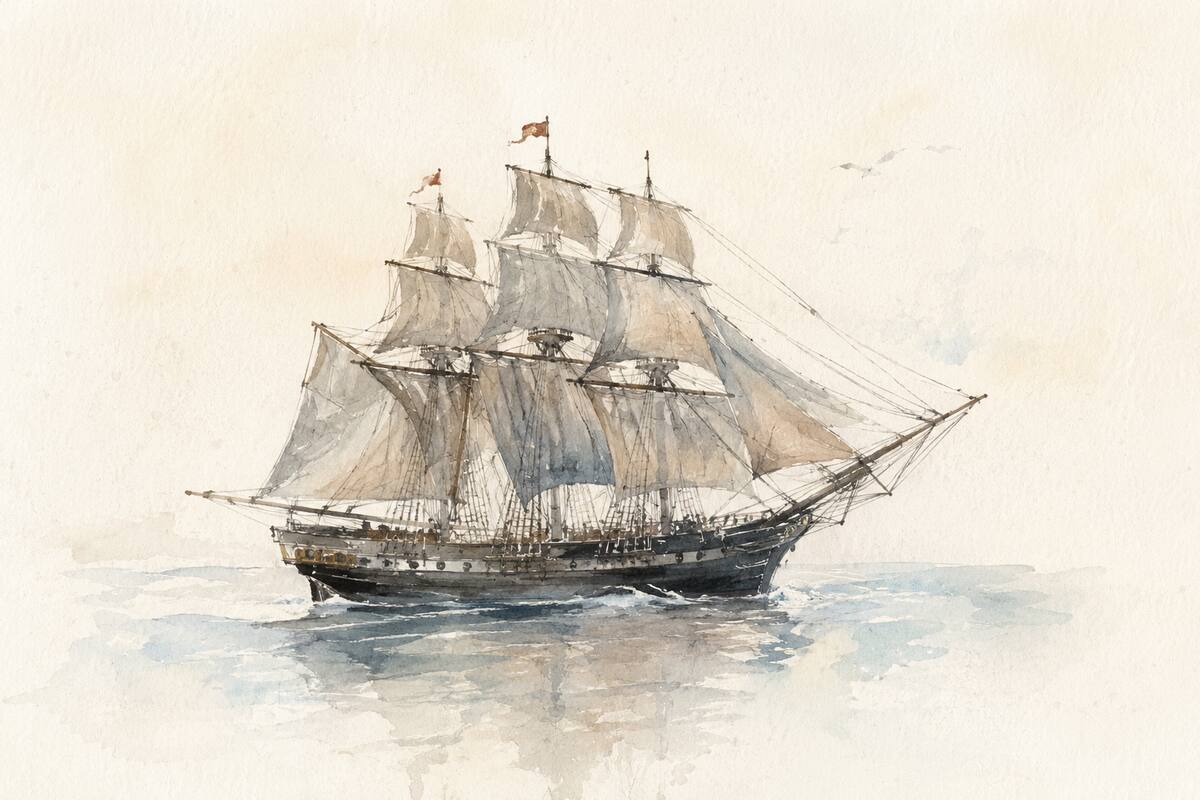
Crossing the Pacific was one of the longest and most dangerous voyages of its time. The run from Manila to Acapulco could take four to six months or more, and the galleons sailed loaded to the limit. According to one source in the corpus, the route saw 26 wrecks or disappearances, against only four ships captured by enemies.
Some wrecks are now archaeological sites: the San Agustín, lost in 1595 in Drakes Bay (California) while exploring the coast; the San Diego, sunk off the Philippines in 1600 after a fight with Dutch ships, whose wreck documents Jingdezhen and Zhangzhou porcelain; or the remains found on beaches in Baja California. Others, such as the San Felipe in 1596 or the Espíritu Santo in 1602, ended up in Japan and shaped relations with that country.
The sources sometimes differ on names and dates — several ships shared a name — and reconstructing a particular wreck means cross-checking chronicles, letters and archaeology.
38 statements24 sources1 discrepancies
Ask the atlas →Which Manila galleons were wrecked, and where?
Where the sources disagree
One San Felipe or two?
The fragments found on the beaches of Guerrero Negro, Baja California, are remnants of the wreck of the San Felipe galleon in 1576. (machine-translated)
In 1596 the Spanish galleon San Felipe was shipwrecked in Japanese waters. (machine-translated)
Two different wrecks of ships sharing a name: one in Baja California (1576) and the other in Japan (1596).
Spotted while preparing this pageWhat the sources say
A selection of the corpus statements on this topic, grouped by source.
Relación de las Islas Filipinas y de lo que en ellas han trabajado los padres de la Compañía de Jesús
- Two large ships, Capitana and Almiranta, which in 1600 were going to New Spain loaded with great wealth, were wrecked on the coasts of the Ladrones and Catanduanes after eight months of navigation with broken winds and great storms, with almost all the people perishing. (p. 205, machine-translated)
- On one of these ships, called San Gerónimo, went father Pedro López de la Parra, a professed member of the Society of Jesus, who after the long voyage and thirty-seven years of religion, died in the shipwreck. (p. 205, machine-translated)
Expedition of Loaisa (Blair & Robertson, Vol. II)
- Except for four, all the crew of the Trinidad perished from hardships, disease, and shipwreck; the four survivors did not reach Spain until 1526.
Voyage to Luzon (Blair & Robertson, Vol. III)
- The Chinese vessels were wrecked on certain shoals at the entrance to the estuary, and the Chinese fell into the power of the Moros, who inflicted a severe punishment on them, flaying their faces and exposing them on reeds and mats.
La Virgen de la Paz y Buen Viaje de Antipolo (Filipinas), Patrona del Galeón de Manila, una advocación jesuítica
- In 1655, Governor Fajardo ordered the construction of the ship San Salvador in Camboya, but it also sank due to a storm. (p. 25, machine-translated)
- In 1655, the ship San Francisco Javier sank in Acapulco during its return voyage from Acapulco, due to a storm. (p. 25, machine-translated)
La ruta del Galeón de Manila historia comercial entre el Imperio Español, Filipinas y China
- The wreck of the San Diego in 1600 evidenced the combination of Jingdezhen and Zhangzhou porcelain in Spanish trade. (p. 4, machine-translated)
- The wreck of the Nan'ao No. in 1570 documented the presence of Jingdezhen and Zhangzhou porcelain in Spanish trade. (p. 4, machine-translated)
El papel del Galeón de Manila en el Japón de Tokugawa Ieyasu (1598-1616)
- In 1596, the Spanish galeón San Felipe sank in Japan due to a storm that severely damaged its rudder and two masts, and later endured another five-day hurricane. (p. 2, machine-translated)
Del Celeste Imperio a la Nueva España: importación, distribución y consumo de la loza de la China del periodo Ming tardío en el México virreinal
- Remnants of the vessels attributed to the San Agustín galleon, captained by Sebastián Rodríguez Cermeño, who sank in Drake's Bay in 1595, have been found. (p. 9, machine-translated)
Una frontera de Ultramar. El estado defensivo de las Filipinas en tiempos de Carlos II, 1665-1700
- Two galleons sank in the Philippine archipelago more than thirty years before 1671, and their wrecks lay at only four fathoms depth. (p. 8, machine-translated)
La esclavitud asiática en el Virreinato de la Nueva España, 1565-1673
- In 1657, the Chinese ship wrecked at Amapala introduced Asian slaves to the Audiencia of Guatemala. (p. 31, machine-translated)
Los sangleyes chinos en el comercio novohispano
- The ship San Lamés wrecked in a storm in the Pacific during the 1525 Castilian expedition. (p. 25, machine-translated)
El Galeón de Manila, hombres de hierro en barcos de madera
- The ship 'Nuestra Señora de la Guía' sank in the Philippines in 1740. (p. 10, machine-translated)
Frequently asked questions
How many Manila galleons were wrecked?
There is no single figure. One source in the corpus counts 26 wrecks or disappearances on the return route to Acapulco; other counts vary with the ships and period included.
Where was the galleon San Agustín wrecked?
In Drakes Bay, on the coast of California, in 1595, under the command of Sebastián Rodríguez Cermeño. Porcelain fragments attributed to its cargo have been found there.
How this page was made: the introduction was written with AI assistance from the project's corpus and checked against its sources. The statements listed are paraphrases extracted automatically from each source (and translated when the source is in another language); they may contain errors, so check the linked original source. Last updated: 2026-10-19.