1513–1545 · Exploration
Before the galleon: the failed attempts to sail back across the Pacific
The Trinidad, Saavedra, Villalobos and Ortiz de Retes: decades of expeditions that could not return from Asia to the Americas, according to the sources, and where they contradict each other.
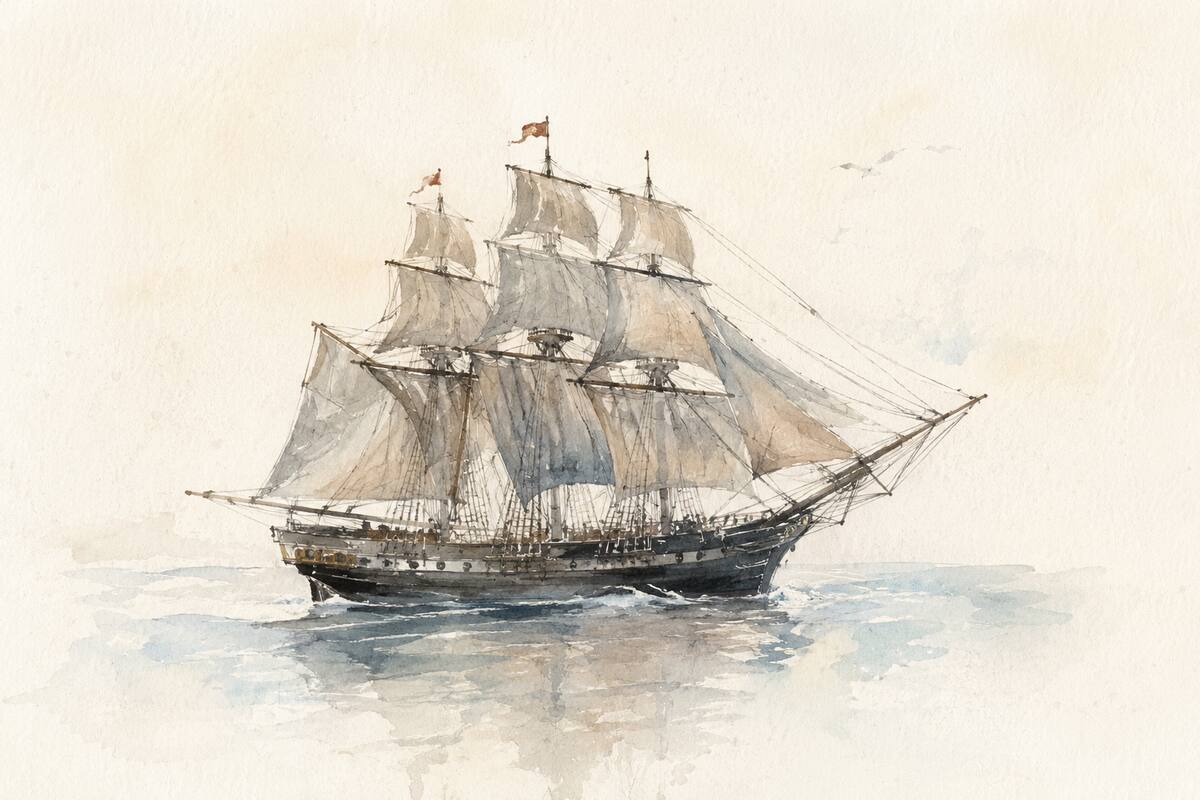
From the moment Balboa sighted the Pacific in 1513 and Magellan's expedition reached the islands of the western Pacific in 1521, Castile tried again and again to open a round trip between Asia and the Americas. Sailing out was possible; sailing back was not.
In 1522 the Trinidad, under Gonzalo Gómez de Espinosa, left Tidore to cross the Pacific and had to turn back to the Moluccas. Álvaro de Saavedra, sent from New Spain by Hernán Cortés in 1527, also failed to return. The expedition of Ruy López de Villalobos (1542–1543), which named one of the islands Felipinas after Prince Philip, tried in vain with the San Juan de Letrán, and Íñigo Ortiz de Retes tried again in 1545.
The sources disagree on how many ships Villalobos took, on the dates of some of Magellan's landfalls and on the fate of the men left behind. That record of failures explains why the 1565 discovery was decisive.
137 statements25 sources5 discrepancies
Ask the atlas →Why did the attempts to sail back across the Pacific fail before 1565?
Where the sources disagree
How many ships did Villalobos take in 1542?
Don Antonio de Mendoza sent Ruy Lopez de Villalobos with four ships, four hundred soldiers and four hundred Indians.
Villalobos' fleet was composed of six ships: the flagship Santiago, the naos San Jorge, San Antonio or San Felipe or Los Siete Galigos, San Juan de Letrán, the galeota San Cristóbal, and a brigantine San Cristóbal or fusta San Martín. (machine-translated)
The gap may come from one source counting only the larger ships while the other includes the fleet's smaller vessels (a galliot, a brigantine).
Detected automatically · reviewed by a personWhen did Magellan's expedition reach the Unfortunate Isles?
On February 4, 1521, they discovered Tiburones island, included with the previous one under the name Infortunadas or Desventuradas. (machine-translated)
after sighting the first uninhabited islands on June 4, 1521, which they called the Unfortunate or Misfortune Islands (machine-translated)
Four months apart for the same landfall. By June 1521 Magellan's expedition had long left those islands behind, so “June” is probably an error in the source or in the extraction.
Detected automatically · reviewed by a personWhat became of Magellan's men left behind in Cebu?
It was heard that on the island of Zubu there were Castilians living since the time of Magellan, and that the Chinese were accustomed to go there to buy gold and certain precious stones.
A man who had been a captive in Cebu related that the natives told him they had sold to the Chinese the eight companions of Magellan who were left on that island.
Two second-hand reports, gathered by different expeditions (Villalobos and Saavedra), about the fate of Magellan's men left in Cebu: one says they were still living there, the other that they had been sold to Chinese traders.
Detected automatically · reviewed by a personWhen did Balboa sight the Pacific: 1513 or 1514?
Vasco Núñez de Balboa sighted the sea from a mountain that dominates the Gulf of San Miguel. (machine-translated)
In 1514, Vasco Núñez de Balboa crossed the Isthmus of Panama and arrived at a new and vast ocean. (machine-translated)
Balboa sighted the Pacific in September 1513; the 1514 date looks like an error in the source.
Detected automatically · reviewed by a personWho named the Philippine Islands?
He was sent to give an account of the expedition and its route; he discovered and named the Philippine islands.
Numerous islands were identified in the Revillagigedo, Marshall, Carolinas, Philippines, Volcano, Bonin and Schouten archipelagos. (machine-translated)
Tradition credits the name to Villalobos, who called one of the islands Felipinas after Prince Philip; some accounts credit Bernardo de la Torre, a captain on the same expedition. Rather than excluding each other, the two statements share out the credit differently.
Detected automatically · reviewed by a personWhat the sources say
A selection of the corpus statements on this topic, grouped by source.
Expedition of Loaisa (Blair & Robertson, Vol. II)
- In Granada, on June 20, 1526, by a royal decree Cortés is ordered to despatch vessels from New Spain to ascertain what has become of the ship Trinidad and her crew left in the Moluccas, and to discover news of the expedition of Loaisa.
- Cortés sent Saavedra to search for Loaisa in 1527.
- Saavedra Cerón's ship ransomed three men from the caravel Santa María del Parral, one of Loaisa's ships, on an island north of Tidore.
Los hallazgos españoles en el Pacífico
- On April 6, 1522, the ship Trinidad, under the command of Gonzalo Gómez de Espinosa, sailed from the island of Tidore to attempt the return voyage across the Pacific Ocean. (p. 5, machine-translated)
- Villalobos orders that Captain Íñigo Ortiz de Retes face the return again. (p. 9, machine-translated)
- The campaign begun in 1542 at the Mexican port of Navidad was commanded not by Juan Gaitán but by Ruy López de Villalobos. (p. 10, machine-translated)
Los sangleyes chinos en el comercio novohispano
- The 1525 Castilian expedition led by García Jofre de Loaisa departed from Seville on July 24th with three ships, one of which went to New Spain, another was lost in a storm, and the third arrived at Tidore the following year. (p. 25, machine-translated)
- The expedition sponsored by Viceroy Don Antonio de Mendoza, under the command of Ruy López de Villalobos, departed from the port of Navidad in October 1542 with six ships and 396 Spaniards plus 400 indigenous slaves. (p. 31, machine-translated)
- The fleet formed by the Santiago, the Florida, and the Espíritu Santo sailed from Zacatula in October 1527 bound for the Spice Islands, under the command of Álvaro Saavedra Cerón. (p. 27, machine-translated)
España y el Pacífico: un breve repaso a las expediciones españolas de los siglos XVI al XVIII
- Ortiz de Retes traveled along the north coast of New Guinea, previously sighted by Álvaro de Saavedra and Grijalva, and took possession of it, giving it that name because of the similarity of its inhabitants to Africans. (p. 5, machine-translated)
- Miguel López de Legazpi, accompanied by the cosmographer Juan de Urdaneta, a survivor of the Loaísa expedition, left Mexico in 1564. (p. 5, machine-translated)
Preface (Blair & Robertson, Vol. II)
- In Navidad, on October 22, 1542, Villalobos and all his officers and men took solemn oaths to carry out their pledges and fulfill their duties.
Ruy López de Villalobos
- Íñigo Ortiz de Retes sailed from Tidore in May 1545 commanding the ship San Juan de Letrán to attempt the return voyage to New Spain. (machine-translated)
Guido de Lavezaris
- The subject joined the expedition organized by Viceroy Antonio de Mendoza, commanded by General Ruy López de Villalobos, to the western islands as accountant of the Royal Treasury in 1542. (machine-translated)
Frequently asked questions
Why was it so hard to sail back from Asia to the Americas across the Pacific?
Because in tropical latitudes the trade winds blow from east to west almost all year. Ships trying to return along that belt sailed into the wind; the solution, found in 1565, was to head north to catch the westerlies.
How many failed attempts were there before 1565?
Sources in the corpus speak of the fifth and sixth unsuccessful attempts around 1543 and 1545; the count depends on which expeditions are included.
How this page was made: the introduction was written with AI assistance from the project's corpus and checked against its sources. The statements listed are paraphrases extracted automatically from each source (and translated when the source is in another language); they may contain errors, so check the linked original source. Last updated: 2026-10-19.