1565–1673 · Society
Asian slaves in New Spain
Besides silk and porcelain, the galleon carried enslaved people from Asia to New Spain, the so-called “chinos”. What the sources say and where they disagree.
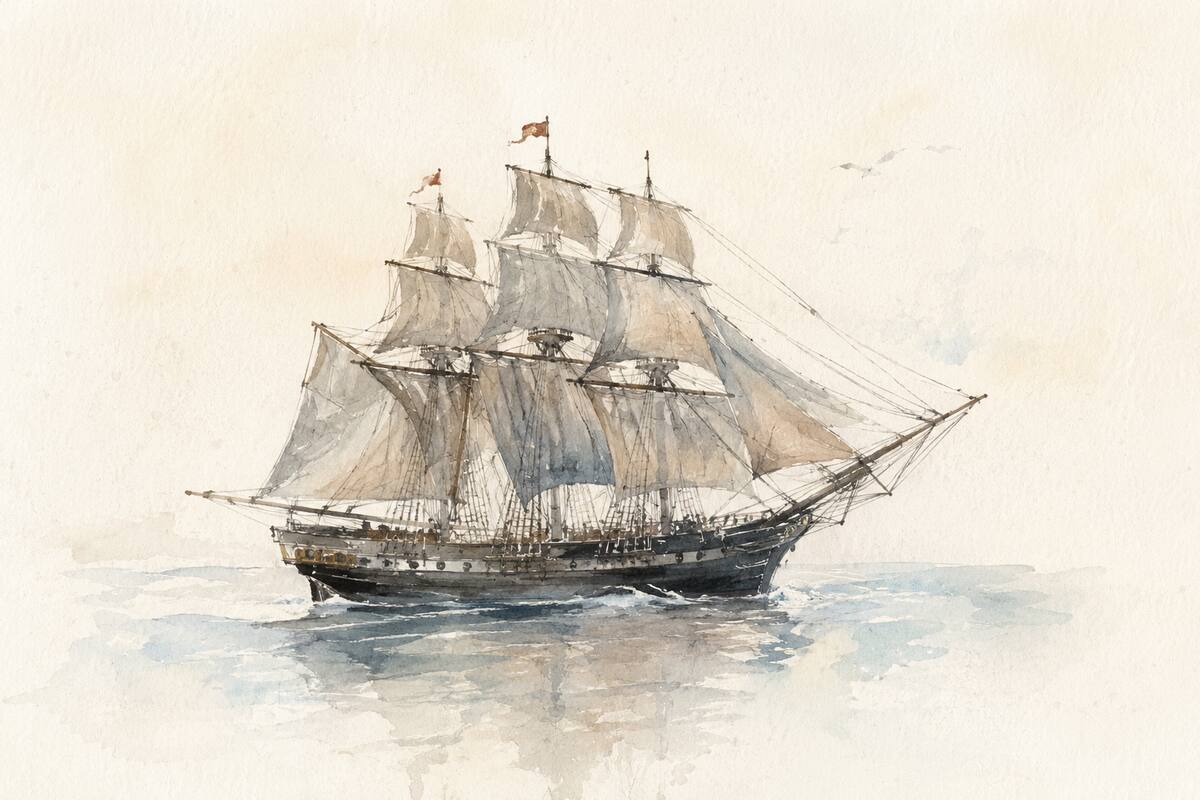
The Manila Galleon did not only carry goods. Between 1565 and 1673 there was a steady traffic of enslaved people of Asian origin — from the Philippines, India, Southeast Asia and other regions — to New Spain, where they were generically called “chinos”, even though many did not come from China.
The sources describe how it worked: slave owners in Manila hired a galleon sailor to feed and lodge the person during the crossing and sell them on arrival in Acapulco. Cases are documented from the earliest years, such as the sale in Acapulco, in 1570, of Muslim inhabitants of Cebu enslaved after the conquest.
Figures are hard to pin down and the sources disagree: for 1621, one study gives 1,970 slaves serving the Spaniards of Manila and another gives 970. In 1672 the Crown declared the “chino” slaves of New Spain free.
87 statements10 sources1 discrepancies
Ask the atlas →How did the Asian slave trade on the Manila Galleon work?
Where the sources disagree
How many slaves were there in Manila in 1621: 1,970 or 970?
In 1621, the number of slaves in the service of the Spaniards of Manila reached 1,970 individuals. (machine-translated)
In 1621, the slave population within the walls of Manila was 970 individuals, constituting one-third of the total population. (machine-translated)
A difference of exactly one thousand suggests a transcription error in one of the two sources; without the original document it is impossible to tell which figure is right.
Detected automatically · reviewed by a personWhat the sources say
A selection of the corpus statements on this topic, grouped by source.
Relación de las Islas Filipinas y de lo que en ellas han trabajado los padres de la Compañía de Jesús
- From India, Malacca and Maluku come to Manila slaves, male and female, white and black, small children and older ones; they are industrious and helpful and many good musicians; they are great seamstresses, cooks and preserve-makers and very clean and tidy servants. There come drugs and spices, precious stones, ivory, pearls, seed pearls, carpets and other riches. (p. 26, machine-translated)
Audiencia to Felipe II (Blair & Robertson, Vol. VI)
- No taxes have been collected on the slaves taken from these islands to New Spain, as there is no order from the King to do so.
Relation of Western Islands (Blair & Robertson, Vol. III)
- It would be less troublesome, and God would be better served, if the Spaniards bought these slaves and took them to New Spain.
Report by Morga (Blair & Robertson, Vol. X)
- They are filling the country with black slaves and Cafres, brought by the Portuguese. (p. 87)
Affairs in the Philipinas (Blair & Robertson, Vol. V)
- Most slaves in Manila are obtained unjustly.
Chapter Vi — Of The Government Of Don Francisco Tello; And Of The Second Establishment (The Philippine Islands, Moluccas, Siam, Cambodia, Japan and China)
- The king sends two ivory tusks and a slave to Manila. (p. 134)
La esclavitud asiática en el Virreinato de la Nueva España, 1565-1673
- Baltasar Pereyra, from Portugal and neighbor of the city of Mexico, engaged in trans-Pacific trade and arrived in the Philippines in 1642, where his family's goods included Asian articles and at least three slaves. (p. 10, machine-translated)
- In 1626, King Felipe IV ordered the viceroy that no notary could register the sale of Chinese slaves without the corresponding duties having been paid by the officials of the Royal Treasury of Acapulco. (p. 26, machine-translated)
- Starting from the 1580s, Iberian merchants introduced slaves constantly in the Philippines from various regions such as the Moluccas, Malacca, Bengal, Goa and Cochin. (p. 17, machine-translated)
Los sangleyes chinos en el comercio novohispano
- In the textile manufacturing workshops that proliferated between 1632 and 1687 in the jurisdiction of Coyoacán, south of Mexico City, Asian slaves and free workers labored. (p. 218, machine-translated)
- Around 1644, the intrusion of the Dutch and English in the area reduced the important source of income for Portuguese merchants from the slave trade. (p. 211, machine-translated)
- The Spanish conquistador Legazpi enslaved the Muslim inhabitants of the island of Cebu and put them up for sale in Acapulco in 1570 along with a shipment of cinnamon. (p. 232, machine-translated)
Los chinos y el modelo colonial español en Filipinas
- Of the 7,200 Asians, 630 were slaves, most from the Portuguese Estado da India, negotiated by the Portuguese with the neighbors of Manila. (p. 6, machine-translated)
Miguel López de Legazpi
- The natives of Mindoro had the Chinese as slaves, who had been captured after their ships sank. (machine-translated)
Frequently asked questions
Who were the enslaved “chinos” of New Spain?
People of Asian origin carried on the Manila Galleon from the Philippines, India and other parts of Asia. In New Spain they were generically called “chinos”, whatever their origin.
When did Asian slavery end in New Spain?
A royal decree of 1672 declared Asian slaves free, treating them as vassals of the Crown like the Indigenous population; the traffic, however, did not disappear at once.
How this page was made: the introduction was written with AI assistance from the project's corpus and checked against its sources. The statements listed are paraphrases extracted automatically from each source (and translated when the source is in another language); they may contain errors, so check the linked original source. Last updated: 2026-10-19.